

can push air conditioner to . As temperatures in Des Moines , notice energy bills, throughout the home and cooling systems that run all day without keeping up.
{It's easy to assume|You may think|People often think} the {air conditioner|AC|air conditioning} {alone determines|is the only thing that affects|is the one thing that determines} how comfortable your home feels. {In reality|However|The fact is}, your home's {airflow|air circulation}, insulation and shade all play {an important|a major|a significant} role in cooling performance.
This guide {covers|explains|highlights} three {practical|effective|simple} strategies that can {improve|increase|enhance} comfort and cooling efficiency: {increasing|improving|boosting} airflow in your home, making sure your home has {adequate|proper|enough} insulation and {using|adding|creating} shade to reduce heat from the sun. {By following|When you follow|Using} these summer AC tips from the pros at Web Connect Demo, you'll keep your house cool {in summer|during heatwaves|in even the hottest weather}.
Start with Airflow: {Help Your AC Work Smarter|Improve Airflow for Better Cooling|Make Your Air Conditioner Work More Efficiently}
{Air conditioners|AC units} {cool|cool the|lower the temperature of} air and {send|move|distribute} it through ductwork to {every room|the rooms|rooms} in your home. For that {cooled|conditioned|cool} air to {make rooms comfortable|keep your home comfortable|cool every room effectively}, it {must|has to|must be able to} move freely throughout {the|your} {house|home}. {If|When|Whenever} airflow is {restricted|blocked}, some rooms may {stay warm|feel warmer than others|not cool properly}.
{Many homeowners|Many people|It's common for homeowners to} blame their {air conditioner|AC|air conditioning system} for {poor cooling performance|an uncomfortably hot home|a hot home}. {However|In many cases|The truth is}, the AC is often working {properly|fine|just fine}—the real problem is {poor|restricted|limited} airflow. {A dirty air filter|Dirty air filters|A clogged air filter}, blocked vents and other HVAC issues can all {reduce|restrict|limit|inhibit|prevent good} airflow.
Home Airflow {Improvement|Optimization} {Checklist|Tips|Strategies}
{Taking|Following these simple|Taking these easy} steps to {improve|boost} airflow in your home can {increase|improve|enhance} comfort, {reduce|lower|minimize} strain on your AC and {lower|reduce|decrease} energy costs.
- {Replace|Change|Swapout} dirty air filters. {Regular|Routine|Consistent} AC air filter replacement helps your HVAC system {circulate air more efficiently|move air more effectively|increase airflow} while {improving|helping improve|supporting} indoor air quality.
- {Ensure|Makesure|Check that} supply and return vents are {unblocked|clear|free from obstructions}. Furniture, rugs and curtains can {create|cause|lead to} blocked air vents that {prevent|stop|keep} cooled air from circulating throughout your home.
- {Openinterior doors|Keep interior doors open|Open up doors in unused rooms}. {This helps|Doing so helps|This allows} air to move more evenly between rooms.
- {Move|Reposition|Relocate} furniture covering registers.{Keeping registers clear|Making sure registers are uncovered|Making sure registers are free of obstructions} allows conditioned air to circulate {properly|freely|more easily}.
- {Schedule|Arrange|Book} preventiveAC maintenance services. {During|As part of|By doing} a professional HVAC tune-up, a technician can {inspect|check|examine} and clean {dirty|dust-covered|debris-covered} blower components that may {reduce|limit|affect} your system's ability to circulate air.
Insulation {Matters More Than Most Homeowners Realize|Plays a Bigger Role Than Many Homeowners Think|Is More Important Than You Might Expect}
Insulation {acts as|serves as|provides} a barrier against {outdoor heat|hot outdoor air|the warm air outside your home}. {While|Although|As} your {air conditioner|AC|air conditioning} removes heat from inside your home, insulation helps {keep that heat from getting inside|prevent outdoor heat from entering|stop heat from moving indoors}. {Better|Proper|High-quality} insulation {improves|increases|enhances} comfort, {reduces|lowers|decreases} cooling run times and can help {extend|increase|maximize} the life of your HVAC system.
The attic is one of the {biggest|largest|primary} sources of {unwanted|solar} heat gain during {summer|hot weather|heatwaves}. Proper attic insulation and cooling {go hand in hand|work together|are closely connected} because attic insulation {slows|reduces|limits} heat transfer through the roof. {Weatherstripping|Sealing gaps|Proper weatherstripping} and sealing around doors and windows also help {keep|prevent|stop} hot outdoor air from {entering your home|getting inside|sneaking inside}.
{When|If|Whenever} insulation levels are too low or air leaks {are present|let warm air into your home|allow hot air to sneak inside}, your {air conditioner|air conditioning|AC} has to work harder. {That often leads homeowners to|This often causes homeowners to|As a result, many homeowners} ask, "Why is my house hot with the AC running?" {In many cases|Often|Frequently}, {home insulation levels—not the air conditioner—are|insufficient insulation—not the air conditioner—is|the real problem is inadequate insulation, and the AC is not} the problem.
Signs of {Low|Poor|Inadequate} Home Insulation Levels
- {Hot upstairsrooms|Warmsecond-floor rooms|Upper floor rooms are always hot}
- {Uneventemperatures|Hotand cold spots|Inconsistent room temperatures}
- {High utilitybills|Risingenergy bills|Higher cooling costs}
- {Air conditioner runningconstantly|AnAC system that runs nonstop|An air conditioner that rarely shuts off}
Use Shade to {Reduce Heat Gain|Keep Your Home Cooler|Help Lower Cooling Costs}
Sunlight {streaming|coming|shining} through windows and {heating|warming|heating up} your roof and exterior walls {raises|increases|boosts} indoor temperatures, forcing your air conditioner to work harder.
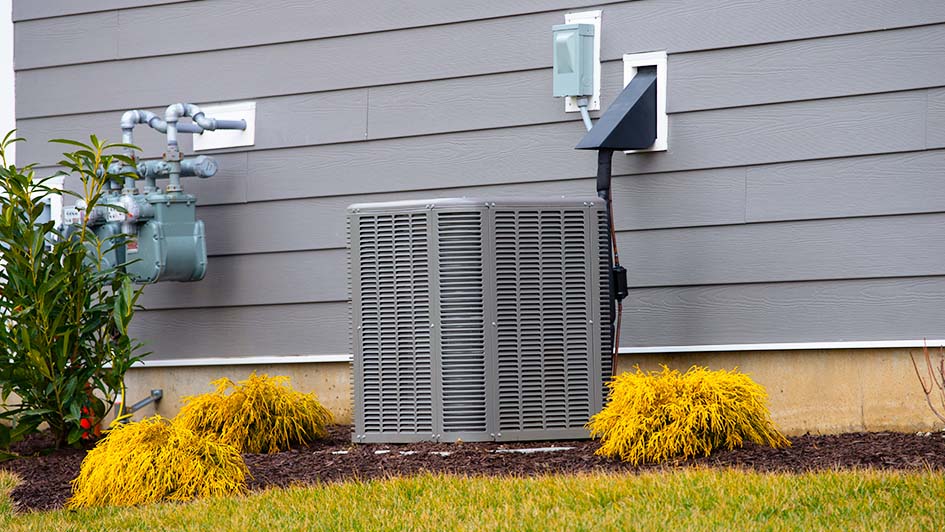
Direct sunlight can also {affect|impact|reduce the efficiency of} your outdoor {AC|air conditioning|cooling} unit by {making it harder|reducing its ability|making it more difficult} to release heat efficiently. {Adding|Creating|Using} shade around your property can {reduce|limit|minimize} solar heat gain, improve comfort and {lower|reduce|decrease} summer energy bills. {Shading|Putting in shade over|Using trees or other landscaping to shade} your air conditioner's outdoor unit can also help—but never {block|restrict|obstruct} airflow around the condenser. {Avoid|Don't install|Keep away} fences, enclosures or dense landscaping that {restrict|block|limit} air movement.
5 Summer AC Tips {for Using Shade to Cool Your Home|for Keeping Your Home Cooler with Shade|to Reduce Heat with Outdoor Shade}
- {Plant|Add|Plan} trees and landscaping strategically. {Use|Position|Place} trees to shade your roof, walls, windows and outdoor {AC|air conditioning|cooling} equipment. {When shading|If you're shading|While providing shade for} your outdoor AC unit, {maintain|keep} at least 2–3 feet of clearance on all sides and 5 feet above the unit to {ensure it receives|allow for|maintain} enough airflow.
- {Use|Install|Add} window coverings. Light-colored curtains, cellular shades and thermal drapes {reduce|help reduce|limit} heat gain from {sun streaming|sunlight shining|direct sunlight coming} through windows.
- {Install|Add|Use} solar screens in your home. Solar screens, which are specially designed mesh curtains, {used|placed} on sun-facing windows help {block|reduce|limit} the sun's heat while still {allowing in|letting in|providing} natural light.
- {Make use of|Strategically use|Incorporate} {exterior shading|outdoor shade}. {Use|Add} landscaping and design features {like|such as} awnings, pergolas, shade sails or exterior shutters to {keep|block|stop} direct sunlight off windows {before it enters|so it doesn't heat up|so it can't heat up} your home.
- {Close your blinds during the afternoon|Keep blinds closed during high heat|Lower blinds in the afternoon heat}. {Shut|Leave|Maintain} blinds or shades closed on west- and south-facing windows during the hottest part of the day to {reduce|help reduce|lower} indoor temperatures and {ease|reduce|lighten} the load on your {air conditioner|AC|cooling system|air conditioning system}.
Additional {Heat-Wave|Hot Weather|Summer Heat} Survival Tips
Airflow, insulation and shade {make|can make|all make} a big difference, but these AC efficiency tips can {further improve|also increase|help improve} comfort during {extreme|periods of extreme|intense} summer heat.
- {Adjust|Change|Settheappropriate} ceiling fan direction. {Run|Operate|Rotate} ceiling fans counterclockwise to {create|produce|provide} a cooling breeze.
- {Avoid|Limit|Reduceuse of} heat-generating appliances during the hottest part of the day. {Use|Run|Operate} ovens, dryers and dishwashers in the morning or evening to {reduce|helpreduce|limit} indoor heat.
- {Manage|Adjust|Set} thermostat settings. {Avoid|Trytoavoid|Don't make} frequent temperature changes that {make|cause|force} your AC to work harder.
- {Schedule|Book|Arrange} preventative maintenance. {Regular|Routine|Professional} service helps your system {operate|run|perform} efficiently before peak cooling season.
- {Monitor|Watchfor|Pay attention to} unusual system performance. {Address|Take care of|Call a professional to investigate} strange noises, weak airflow or inconsistent cooling before they become {larger|more extensive|more expensive} repairs.
{Know|Recognize|The Importance of Knowing} When It's Time to {Call|Contact|Turn to} an HVAC Professional
{At-home|DIY|Basic} AC maintenance and {energy-efficient|energy-saving|efficiency-focused} cooling strategies can help, but some problems {require|need|call for} professional attention. {If|When|If you notice} warm air is coming from your vents, airflow feels weak, your {air conditioner|AC|air conditioning} {runs almost|seems to run} constantly, energy bills {suddenly increase|spike|increase for no reason}, rooms cool unevenly or your system turns on and off repeatedly, {it's time for|it's a good idea to schedule|you should consider} an expert evaluation.
At Web Connect Demo, our cooling specialists {evaluate|inspect|assess} airflow, duct performance, insulation-related comfort concerns and overall system health to {identify|determine|pinpoint} the {real|underlying|actual} cause to help your HVAC system {perform|operate|run} at its best throughout the summer.
{Keep Your Cool|Stay Comfortable|Enjoy Reliable Cooling} All Summer Long
{Keeping your home|Staying|Staying comfortably} cool during a heat wave {involves|requires|takes} more than just your {air conditioner|AC|air conditioning}. Proper airflow, adequate insulation and {strategic|well-planned|effective} shade work together to {improve|increase|enhance} comfort, {increase|improve|boost} efficiency and {reduce|lower|decrease} cooling costs. {Combined with|When paired with|Along with} regular summer HVAC maintenance, these strategies can help your system {perform|operate|run} at its best when you need it most.
Web Connect Demo has the {training|knowledge|expertise} and experience to keep you comfortable {all season long|in even the hottest weather|no matter how hot it gets outside}. {Whether you need|If you're looking for|If you're in need of} AC maintenance, a cooling system inspection, an airflow evaluation or a complete summer tune-up, {we'll help|our team can help|we're here to help} boost efficiency and comfort during hot Des Moines summers. Schedule cooling services online or call 123-123-1234 today to get started.
